Tags
What replaces a pain that is happening in the mind?
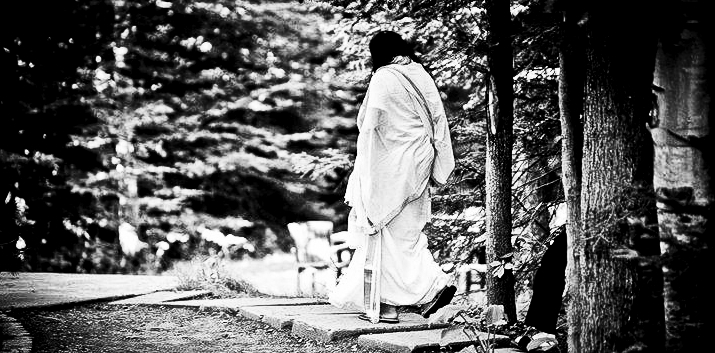
There is a little story that Vyasa has not included in his great epic perhaps because it is too cruel in its honesty to put down in writing. Bards say, that Gandhari refused to leave the battleground strewn with corpses of her children even when the sun set. “Go home,” she told her husband and her servants and her daughters-in-law, “Let me be here alone with my children. Their presence comforts me.” So they left her alone. Old and frail, she waved her stick to keep the wolves and vultures from getting to the rotting flesh of her sons. Krishna came and tried to persuade her. “They are gone,” he said, “Why do you cling to their bodies.” And she replied, “You will never know a mother’s pain.” And he said, “A pain remains until another pain comes along.” And she retorted, “This pain is permanent. It is a mother’s pain. It will not pass.” Krishna left.
The moon rose. Hungry wolves waited for the mother to tire. She waved her stick with determination – none would get to her sons. They were under her protection. Suddenly, Gandhari felt a pang of hunger. A hunger she had never felt before. A great hunger that it caused her to bend and bind her stomach. It was as if she had not eaten for a thousand days. She could not think or feel anything. All she wanted suddenly was food. And when the thought of food entered her mind, the smell of a mango entered her nostril. It was the sweetest of smells and it came from above her. She tried to get to it but it was out of reach. So she found a stone and climbed on it to get to it. Still the mango was out of reach. She put another stone above the first one, but the mango was still out of reach. Then other stone and another, a whole pile, before she finally got hold of the mango. She plucked it and sucked on it: it was the most sweetest richest succulent fruit she had ever eaten. She ate it quickly, even the skin, licked her fingers and felt the hunger pass away. With the hunger gone, the pain returned – the horror of her children’s death. What was she doing eating a mango when they were dead? She felt the stones on which she was sitting – they felt softer and wet, almost like flesh! She recoiled. These were not stones on which she sat; these were the bodies of her children. She sat on them and ate mangoes. How could she? Then she remembered Krishna’s words, “A pain remains until another pain comes along.” This was his way of teaching that her pain, though very deep and very valid, was like all pains impermanent. This was a cruel lesson of a ruthless god. Gandhari howled at the truth of her insight. Then she screamed a curse, “May you Krishna witness the death of your children and your children’s children. And may you die alone in the forest, hunted down like a beast.”
Krishna came and hugged her. She wept. And she felt Draupadi weeping next to her. Both were being hugged by Krishna, the mother of villains and the mother of heroes, both being comforted by he who they say is God. He said nothing. He allowed Gandhari to vent out her venom and he accepted the curse quietly – no retaliatory curse was given. Yes, his children would die as Gandhari had deemed fit and so would he. Let his clan suffer so that the spiral of vendetta does not continue. It has to end sometime. And if this demands the sacrifice of his clan, then let it be so.
Img source : https://www.quora.com/Why-did-Gandhari-curse-Krishna-and-Krishna-agree-and-accept-to-be-cursed
 Art of Living, Sri Sri Ravi Shankar and My Self!